Launch offer — valid today only

📄 Digital book in PDF · read it on your phone or print it

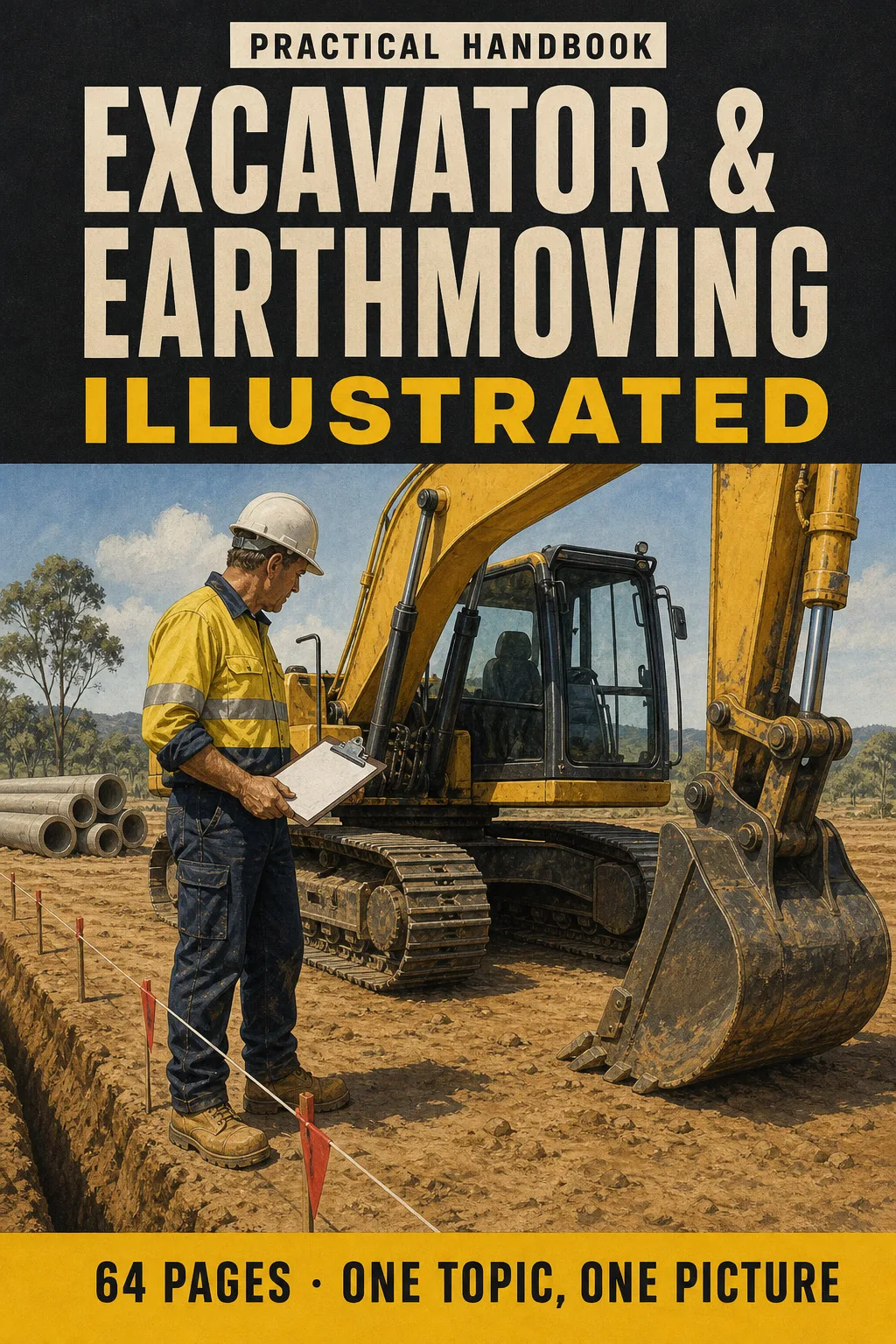
Excavator & Earthmoving Illustrated: Every Check, Signal and Trench Rule in Drawings One Topic per Page, Every Step Drawn

Pre-start checks, the exclusion zone, hand signals, trenching and benching, buried services, overhead lines, truck loading, levels and shutdown. All in metric, checked against the Australian codes of practice. Each topic has its own page: the drawing first, then what you need to remember. 64 illustrated pages.

LEARN THE JOB THIS WAY

🔒 Secure checkout · PDF by email · 30-day guarantee

Every topic, its own pageEach check and each step drawn, with the explanation beside it
64 illustrated pages8 parts, from the first pre-start check to the whole job on one page
Up-to-date sourcesSafe Work Australia model codes, state regulator guidance and AS/NZS 3500
PDF by emailFormat

Look Inside the Book

Each page has one big drawing and a box with the distances, rules and steps you need to know:

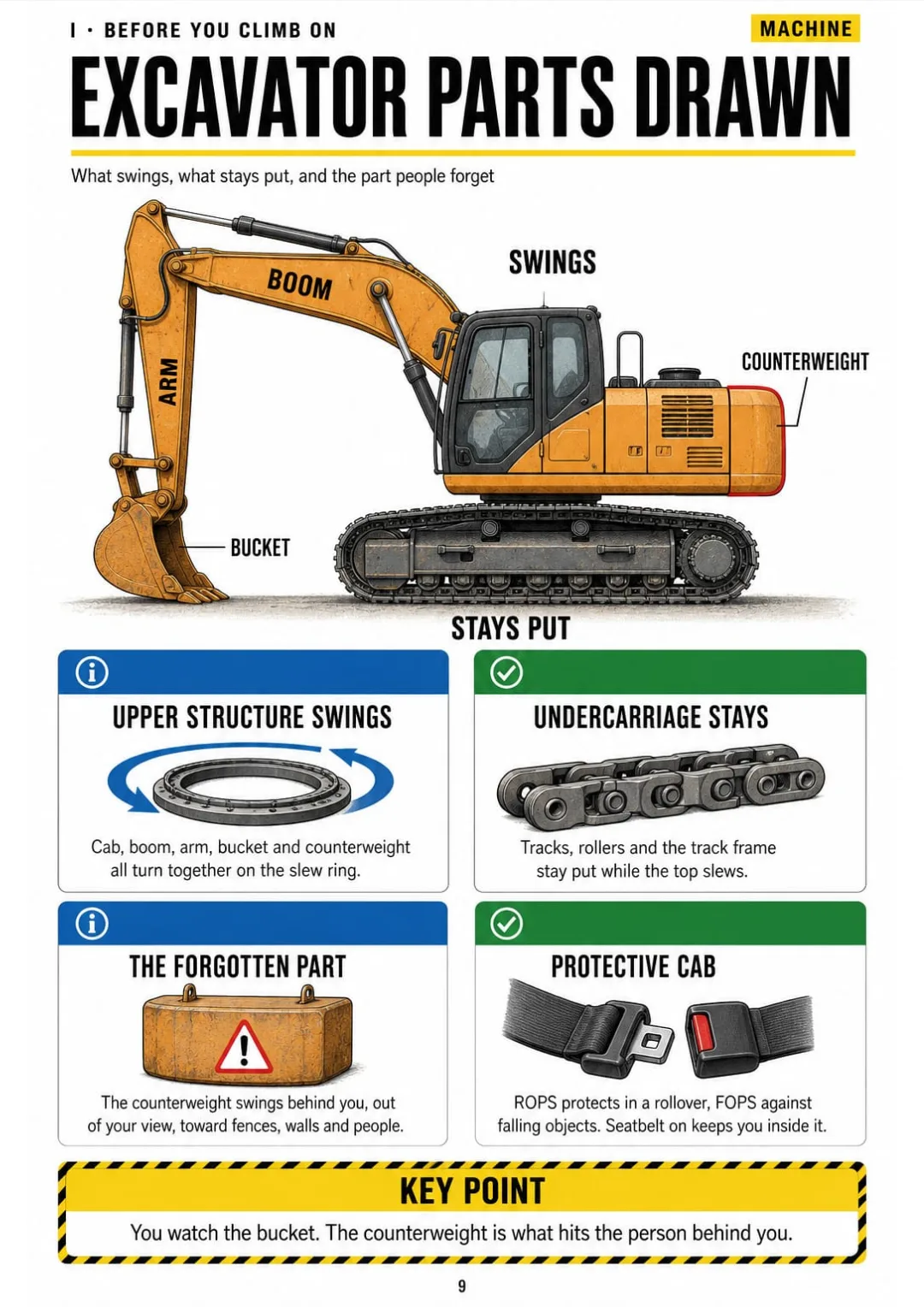
Labelled excavator: boom, arm, bucket, hitch, slew ring, counterweight, tracks, cab.
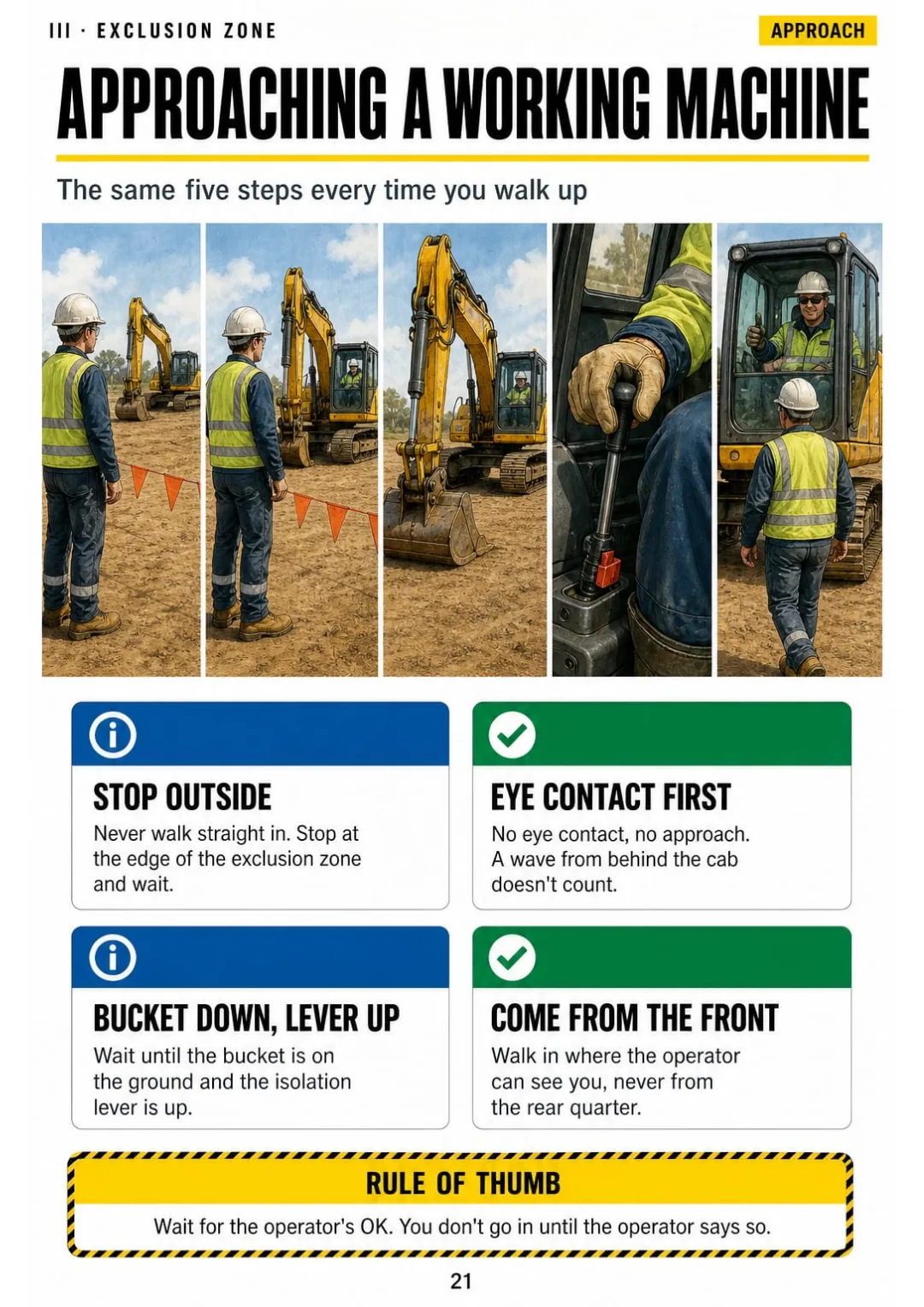
Approach in 5 steps: stop, eye contact, bucket down, isolation lever up, front approach.
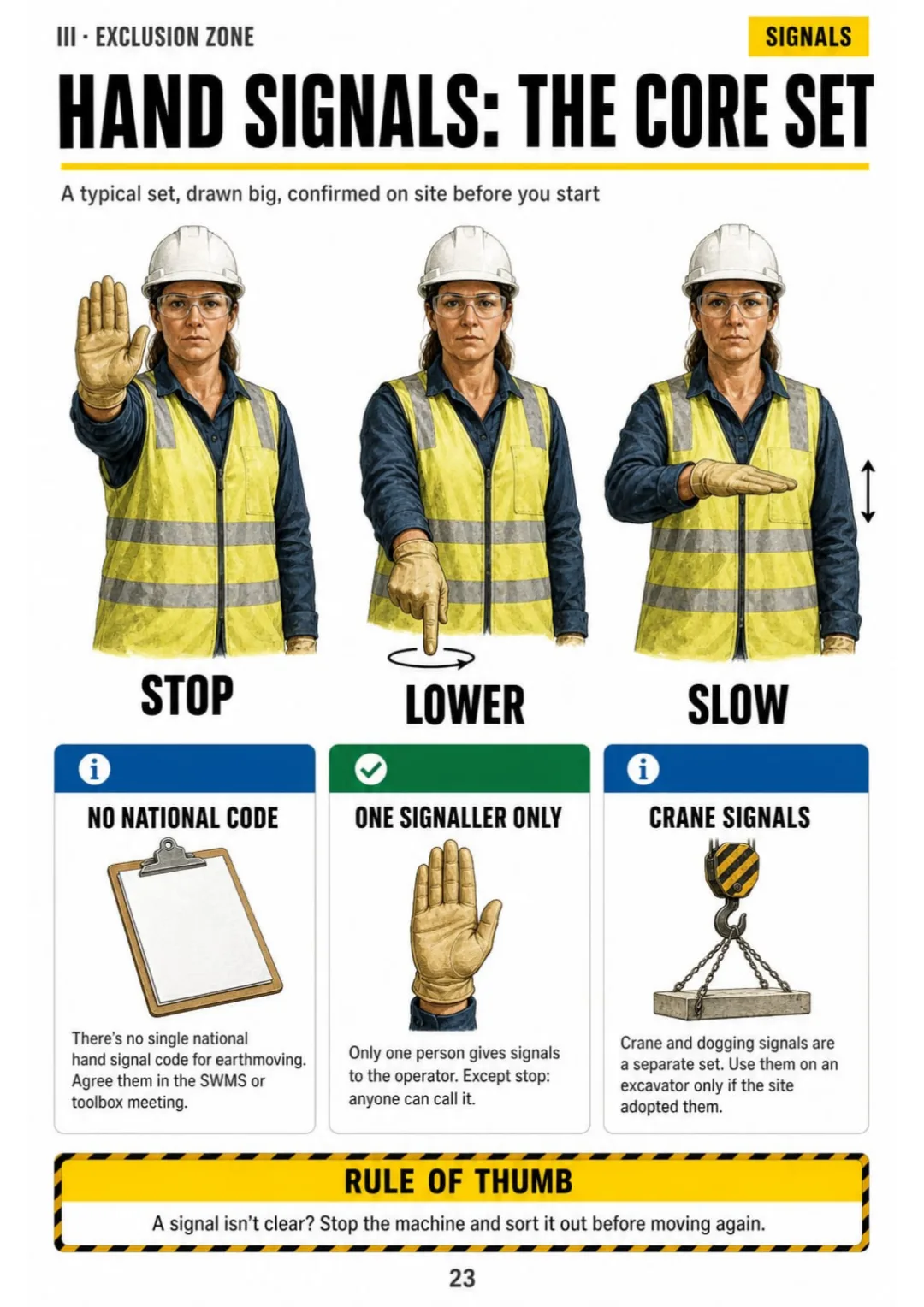
Core set drawn big: stop, lower, slow. Agree the full set on site.
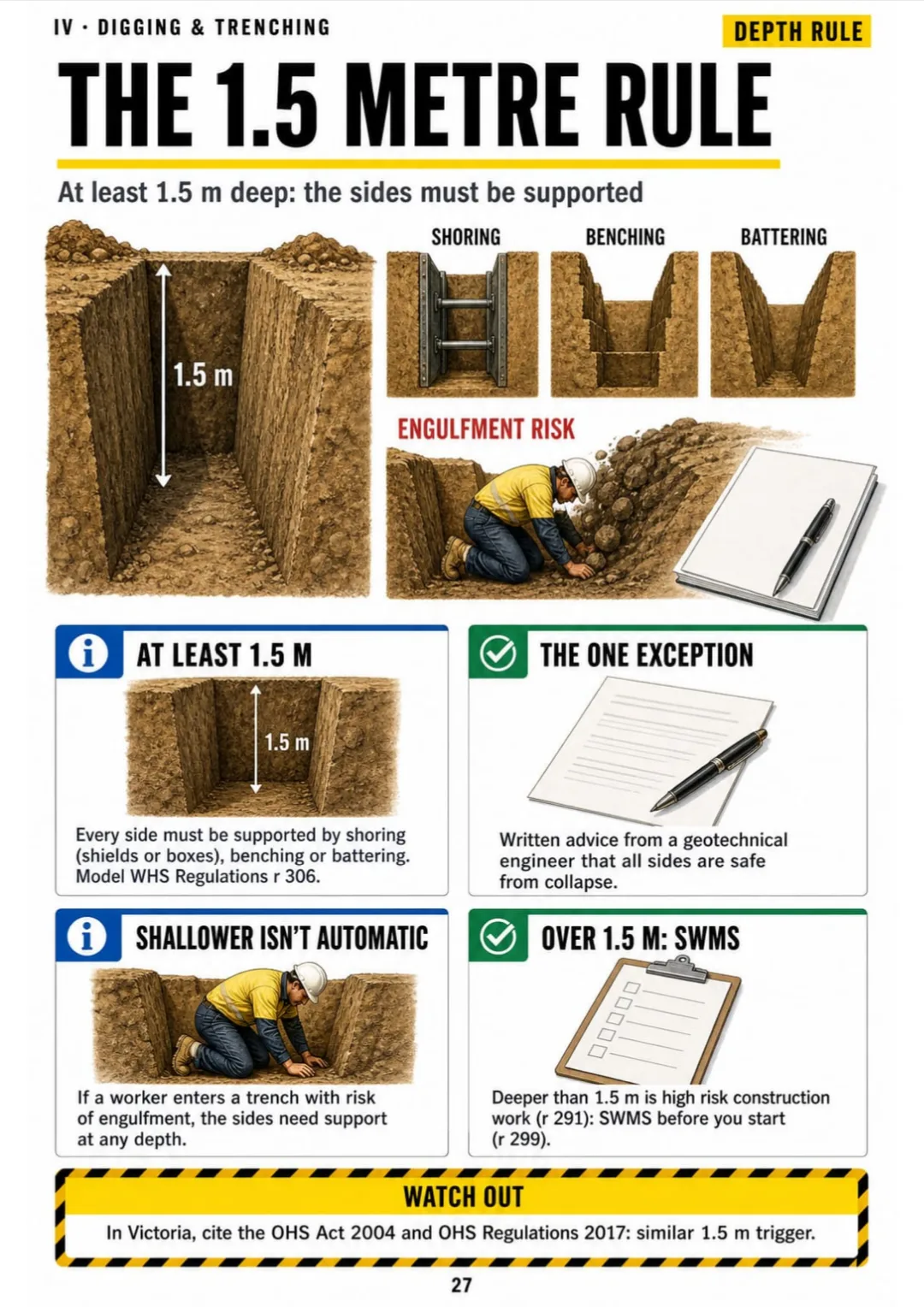
Trench at least 1.5 m deep: shoring, benching or battering, unless a geotech says otherwise in writing
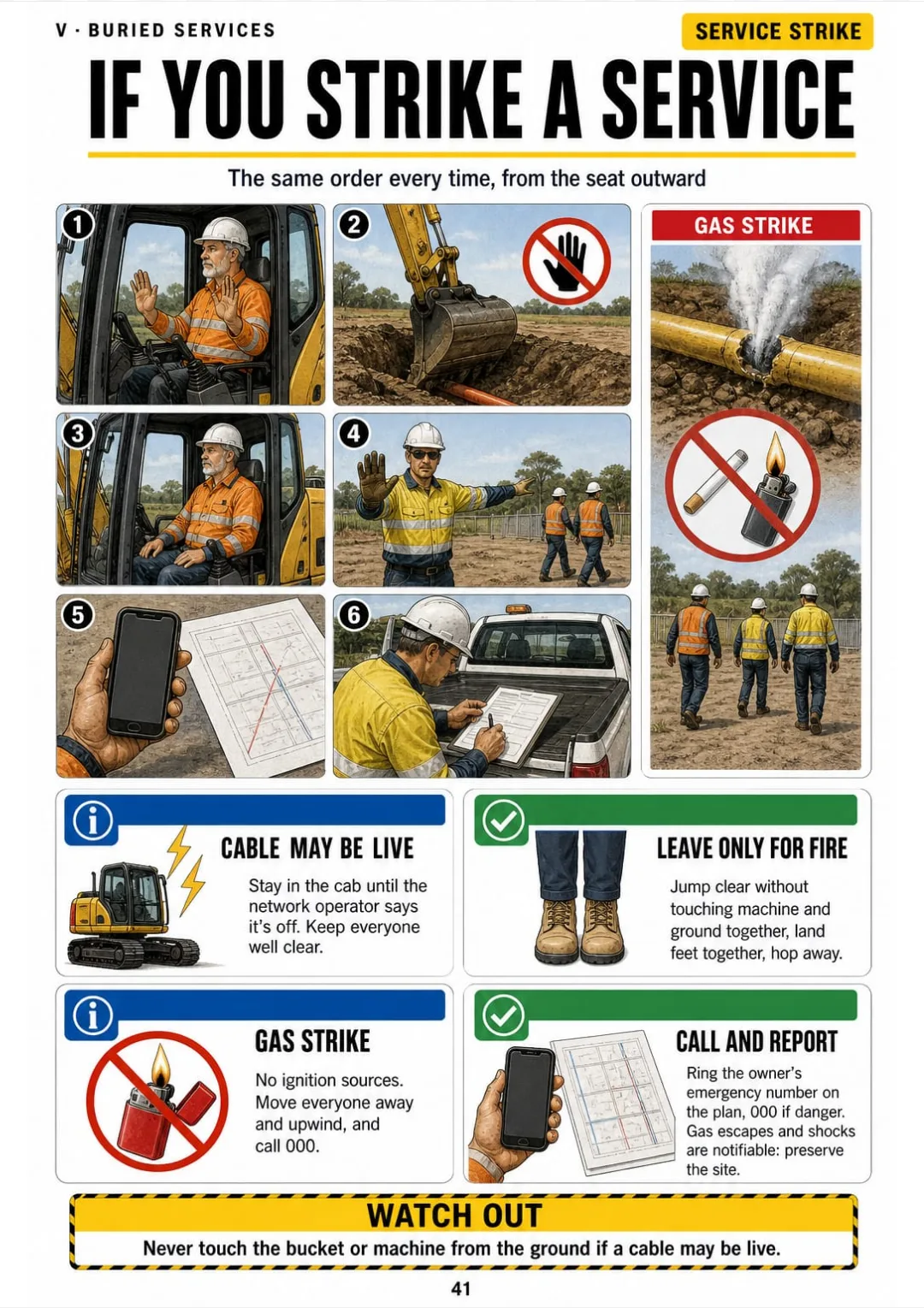
Cable strike: stay in the cab until the network operator confirms power is off; keep everyone well clear.
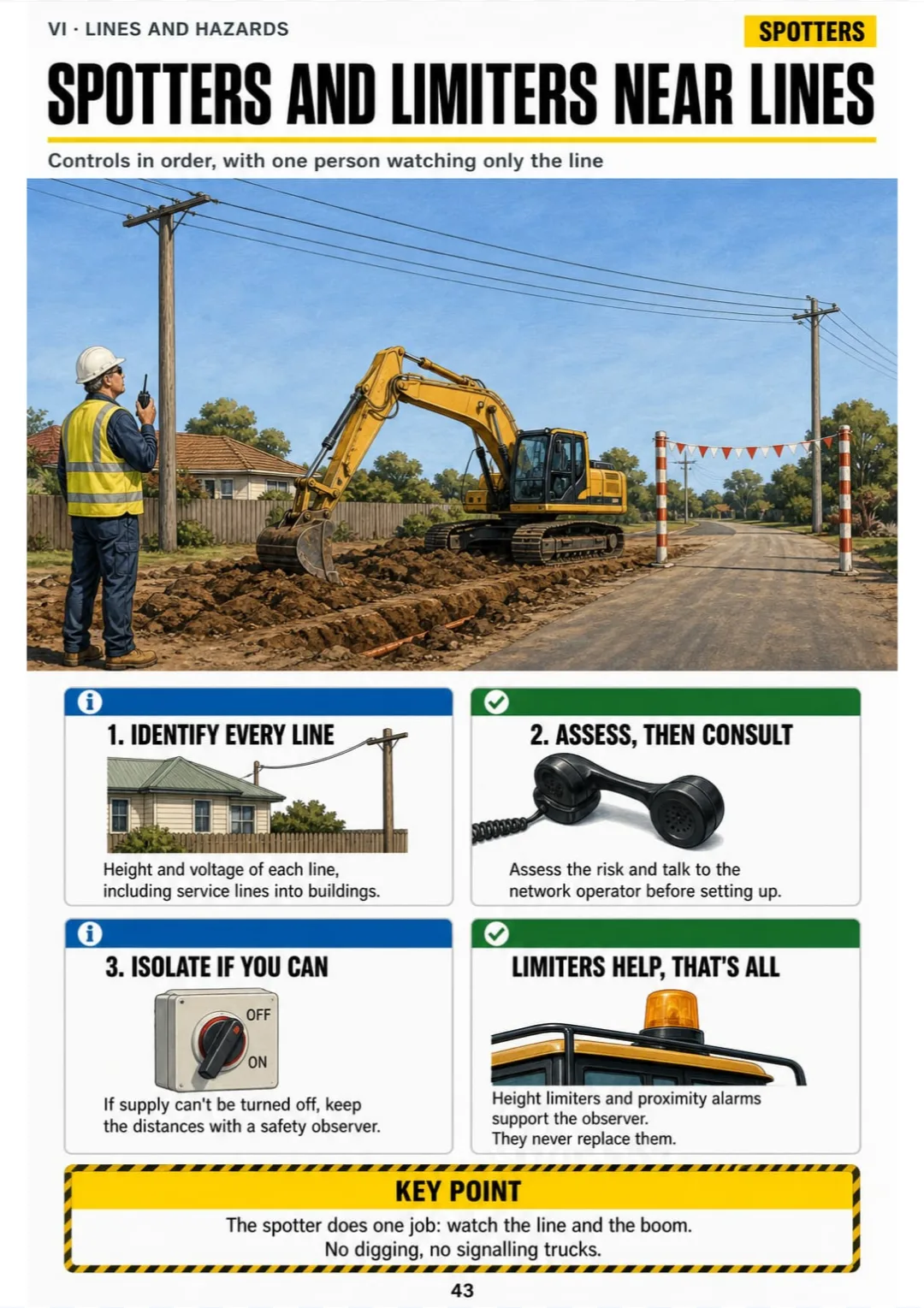
Identify, assess, consult, isolate, then keep distance with a safety observer
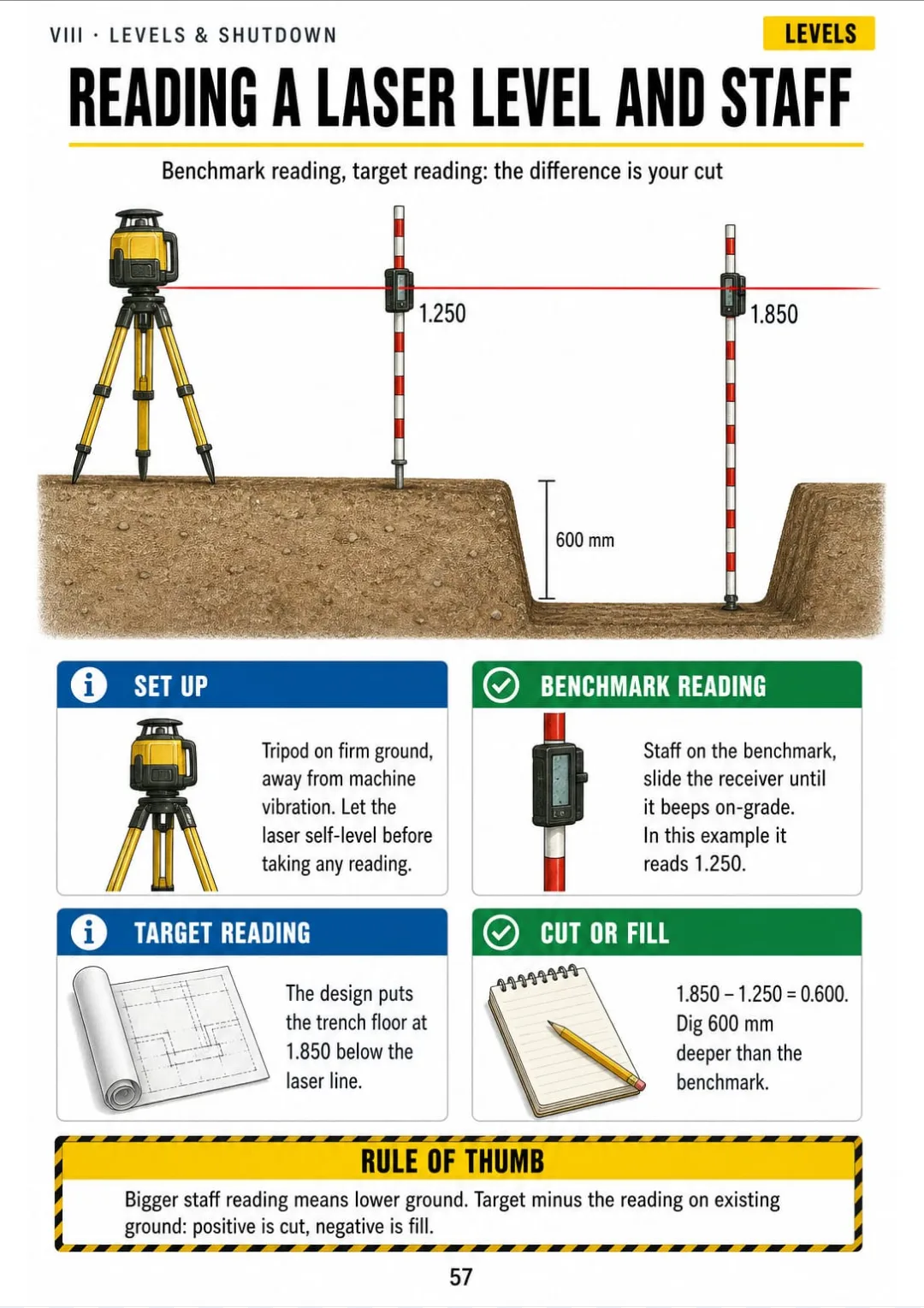
Benchmark 1.250, target 1.850: dig 600 mm deeper than the benchmark.
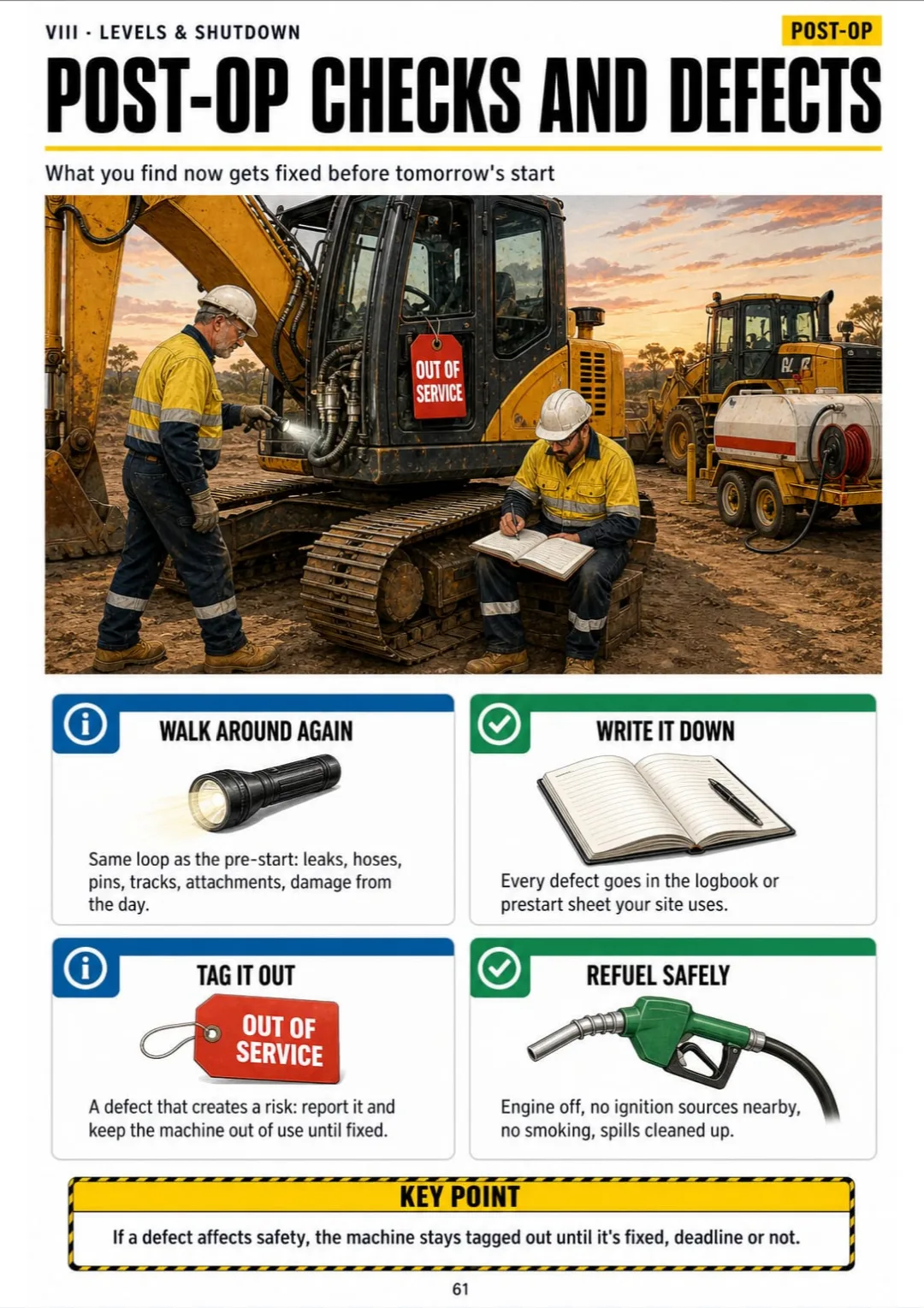
Walk around, log defects, tag out unsafe plant, refuel with the engine off.

Swipe to see more →

These are real pages from the book. The table of contents is the full one: 8 parts and 60 topics.

The Problem Isn't You. It's How It Was Explained to You.

You're in the seat with the bucket half full and the supervisor watching from the trench edge. The spotter holds out a flat hand, then makes a circle you don't recognise. Is that slow, or swing?

Someone showed you the signals once, on your first day, with the engine running. The induction pack describes them in paragraphs: arm out, palm down, moved side to side. Words don't show you what a moving hand looks like from the cab.

Core set drawn big: stop, lower, slow. Agree the full set on site.

In this book the hand signals get one page. Each signal is a big drawn figure: stop, emergency stop, raise, lower, swing, forward, back and slow, side by side, as you see them from the seat.

The rest of the job works the same way. The exclusion zone from above, the 1.5 metre rule, reading an asset plan, overhead line no-go zones and loading a truck each have their own page.

You look once, you know what the spotter wants, and you keep working. You don't have to dig the induction folder out of the ute.

COMPARE FOR YOURSELF

Same Topic, Two Ways to Learn It

THIS
  • The manual: line after line
  • Exclusion zones explained only in words
  • You climb on still unsure
Prior to the commencement of excavation work, the person conducting the business or undertaking should ensure that an exclusion zone is established around items of mobile plant, having regard to the maximum operating radius of the boom, arm and attachment, the tail swing of the superstructure during slewing, and an additional clearance margin determined through risk assessment. The zone should be delineated by suitable physical means, such as bunting or barriers, and no person should enter it unless the operator has been notified and plant movement has ceased.
FOR THIS
  • The exclusion zone in one drawing
  • The distances and steps in a box
  • You see it and you get it
Approach in 5 steps: stop, eye contact, bucket down, isolation lever up, front approach.
CONTENTS

Take a Look at the 8 Parts and 60 Topics

Before you climb on, pre-start and start-up, exclusion zone and spotters, digging and trenching, buried services, overhead lines and other hazards, loader, skid steer, dozer and truck loading, and levels and shutdown: 64 pages, all illustrated.

IBefore You Climb On · pp. 5-11
  1. The Four Steps on Every Page: Look, Check, Do, Close
  2. Your Duty on Site, in Plain English
  3. Training and Competency: What Applies to Earthmoving
  4. Reading a SWMS Before Excavation Work
  5. Know Your Machine: Excavator Parts Drawn
  6. Zero Swing, Short Tail, Conventional
  7. Controls Change Between Machines
IIPre-start and Start-up · pp. 12-18
  1. The Walk-around in One Loop
  2. Fluids: What to Check Cold and Level
  3. Tracks, Rollers and Sag
  4. Hoses, Pins and Greasing Points
  5. Quick Hitch: Couple, Lock, Test
  6. Climbing On: Three Points of Contact
  7. Start-up Checks in the Seat
IIIExclusion Zone and Spotters · pp. 19-25
  1. The Exclusion Zone Drawn from Above
  2. Blind Spots Around the Cab
  3. Approaching a Working Machine
  4. When You Need a Spotter
  5. Hand Signals: The Core Set
  6. Radios and Agreed Words
  7. Plant, Trucks and People: Separation
IVDigging and Trenching · pp. 26-34
  1. Ground First: Reading the Soil
  2. The 1.5 Metre Rule
  3. Battering: Sloping the Walls
  4. Benching: Steps in the Wall
  5. Shoring and Trench Shields
  6. Where the Spoil Goes
  7. Digging Sequence for a Clean Trench
  8. Getting In and Out of a Trench
  9. Water, Rain and Open Trenches Overnight
VBuried Services · pp. 35-41
  1. Plans Before You Dig
  2. Reading an Asset Plan
  3. Locating: Locator, Marks and Paint
  4. Potholing: Proving the Service
  5. Digging Alongside a Live Service
  6. Warning Tape and Marker Signs
  7. If You Strike a Service
VIOverhead Lines and Other Hazards · pp. 42-47
  1. Overhead Power Lines: No-go Zones
  2. Spotters and Height Limiters Near Lines
  3. If the Machine Touches a Line
  4. Slopes, Edges and Soft Ground
  5. Lifting with an Excavator
  6. Dust, Silica, Noise and Heat
VIILoader, Skid Steer, Dozer and Truck Loading · pp. 48-56
  1. Loading a Truck: Where the Truck Sits
  2. Loading a Truck: Even Load, Legal Mass
  3. Excavator Bench Loading
  4. Front-end Loader: The V Pattern
  5. Skid Steer: Load Low, Heavy End Uphill
  6. Skid Steer Attachments and Lift Arms
  7. Dozer Basics: Blade and Ripper
  8. Dozer Spreading and Trimming
  9. Backfilling and Compaction Layers
VIIILevels, Shutdown and Review · pp. 57-64
  1. Reading a Laser Level and Staff
  2. Falls in Plain Numbers
  3. Checking Depth as You Dig
  4. Shutdown in the Same Order
  5. Post-op Checks and Reporting Defects
  6. Common Mistakes on Site
  7. Stop-work Triggers
  8. The Whole Job on One Page

One Page, One Topic, All Clear

Think of it this way:

It's 6.30 in the morning. The plans show a gas main along the boundary, and you're about to put the bucket in the ground with the supervisor watching.

You open the buried services page and see the potholing drawn step by step: the locator marks, the hand-dug hole, the service exposed, and then where the bucket is allowed to go.

Cable strike: stay in the cab until the network operator confirms power is off; keep everyone well clear.

The walk-around, the exclusion zone, benching a trench wall, loading a truck and checking depth off the laser work the same way: each one has its own page.

Excavator & Earthmoving Illustrated has 8 parts and 60 topics, all drawn. It finishes with the common mistakes, the stop-work triggers and the whole job on one page.

What you see drawn, you don't have to memorize.

What's Inside Excavator & Earthmoving Illustrated:

Ipp. 5-11

Before You Climb On

Climb on any machine knowing what you're looking at: the four steps on every page, your duty on site in plain English, reading a SWMS, the parts of an excavator, zero swing versus conventional, and why controls change between machines.

IIpp. 12-18

Pre-start and Start-up

The walk-around in one loop, fluids, tracks and sag, hoses, pins and grease points, coupling and testing a quick hitch, climbing on and start-up checks in the seat.

IIIpp. 19-25

Exclusion Zone and Spotters

The exclusion zone from above, blind spots around the cab, approaching a working machine, spotters, the core hand signals, radios and keeping plant, trucks and people apart.

IVpp. 26-34

Digging and Trenching

Reading the soil, the 1.5 metre rule, battering, benching, shoring and shields, where the spoil goes, a clean digging sequence, getting in and out, and open trenches overnight.

Vpp. 35-41

Buried Services

Know where the bucket can go before it touches the ground: plans before you dig, reading an asset plan, locators and paint marks, potholing, digging beside a live service, warning tape and what to do if you strike one.

VIpp. 42-47

Overhead Lines and Other Hazards

Overhead line no-go zones, spotters and height limiters, what to do if the machine touches a line, slopes and soft ground, lifting with an excavator, and dust, silica, noise and heat.

VIIpp. 48-56

Loader, Skid Steer, Dozer and Truck Loading

Where the truck sits, even loads and legal mass, bench loading, the loader V pattern, skid steers on slopes and their attachments, the dozer blade, ripper and trimming, and backfill layers.

VIIIpp. 57-64

Levels, Shutdown and Review

The laser level and staff, falls in plain numbers, checking depth as you dig, shutdown and post-op checks, defect reports, common mistakes, stop-work triggers and the whole job on one page.

At the end of the book: Common site mistakes, stop-work triggers and the whole job on one page.
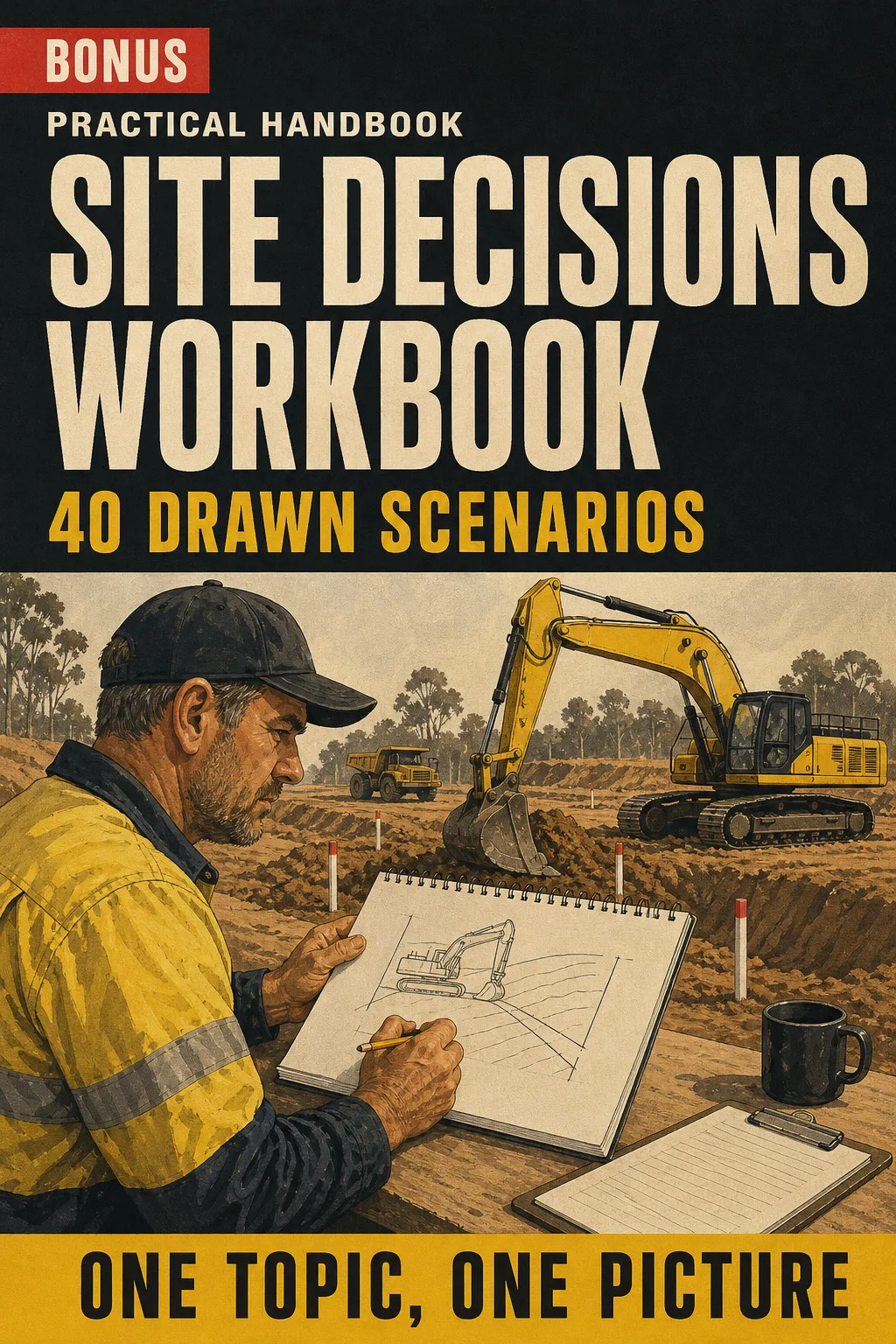
Plus: 2 Free Books

Site Decisions Workbook: 40 Drawn Scenarios

BONUS 1: «Site Decisions Workbook: 40 Drawn Scenarios»

Value on its own: US$ 17.90

Practise the calls you make on site — where people stand, batter or bench, when to stop and hand dig — on simple drawn site plans, with the answer explained on the next page.

Operator Quick-Reference Cards

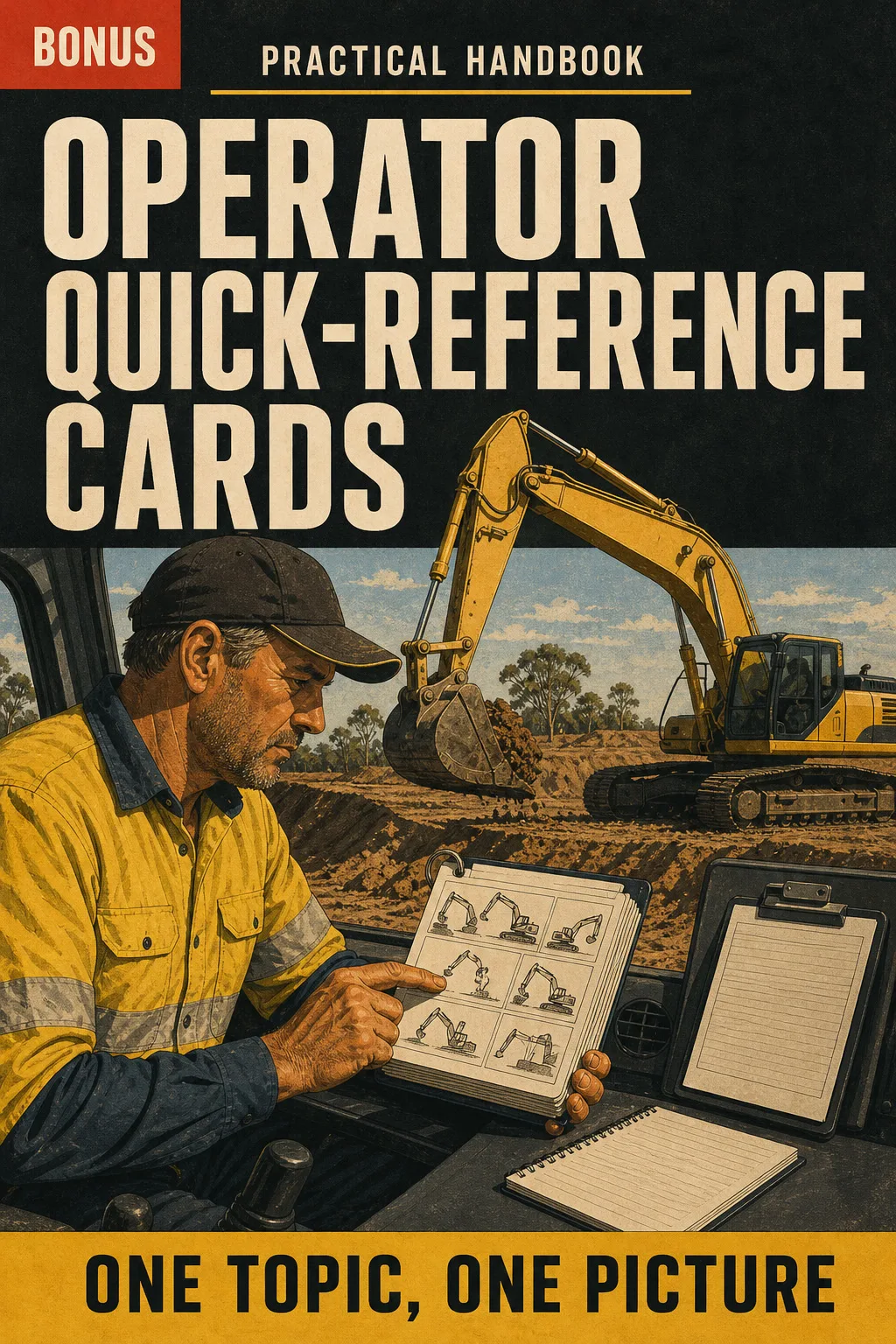
BONUS 2: «Operator Quick-Reference Cards»

Value on its own: US$ 14.90

The pre-start, exclusion zone, services and shutdown steps on printable cards, so you can go over them in the ute before you climb on.

Excavator & Earthmoving Illustrated with 2 Free Books

  • Excavator & Earthmoving Illustrated: 64 illustrated pagesUS$ 63
  • BONUS 1: Site Decisions Workbook: 40 Drawn ScenariosUS$ 17.90
  • BONUS 2: Operator Quick-Reference CardsUS$ 14.90
  • High-resolution PDF to printIncluded
Total value US$ 95.80
YOUR PRICE:
US$ 27
You save US$ 68.80
YES, I WANT EXCAVATOR & EARTHMOVING ILLUSTRATED FOR US$ 27

📄 This is a digital PDF book sent to your email: nothing is printed or shipped.

Secure purchaseEncrypted payment30-day guarantee

PDF by email: We email you Excavator & Earthmoving Illustrated as a PDF, together with the two free books. It's a single payment: no installments, no extra charges.

Who This Book Is For

Moving up from labouring, or booked in for your ticket

Moving up from labouring, or booked in for your ticket

You already know the site. Before your excavator course or a VOC, go over the machine side one page at a time, from the walk-around to loading a truck.

Back on the machine after a break

Back on the machine after a break

Go over the pre-start, the exclusion zone and the trench rules before your first day back, always in the same order.

Running a small crew

Running a small crew

Hand your new operator the same drawn pages you'd explain on site, so everyone works the job the same way.

Everything You Get Today

US$ 95.80US$ 27
YES, I WANT EXCAVATOR & EARTHMOVING ILLUSTRATED FOR US$ 27

📄 This is a digital PDF book sent to your email: nothing is printed or shipped.

30DAYS
GUARANTEE

30-Day Guarantee

Try Excavator & Earthmoving Illustrated for 30 days, bonus books included.

We refund everything if the file won't open, if the book isn't what you see here, if you were charged twice or if the email doesn't arrive. Just email us.

You pay once. No subscriptions.

Frequently Asked Questions

Is it for me if I've been on site for years and just want to brush up?

Yes. There's one topic per page, so you can go straight to the exclusion zone, benching or the laser level without reading it cover to cover.

Where does the content come from?

It's checked against the Safe Work Australia model Codes of Practice for excavation work, plant and construction work, the model WHS Regulations, state regulator guidance on overhead lines and plant, and AS/NZS 3500 for drainage falls. Everything is in metric: metres, millimetres and tonnes. Some distances vary by state, so always check your state's current version.

Is it official material?

No. It's an independent illustrated guide. It isn't issued, approved or endorsed by Safe Work Australia, any state regulator or any machine manufacturer, and it doesn't give you a ticket, a statement of attainment or a VOC. It helps you understand and go over the job you're assessed on.

Does it replace training on the machine?

No. It doesn't replace your site induction, supervised training, your SWMS or the manufacturer's manual. It has no brands: controls, joystick patterns and quick hitches are explained in general, so it works whatever machine you run. For your machine's controls, hitch and limits, always follow the manufacturer's manual.

Are the practice scenarios taken from an official assessment?

No. The 40 scenarios in the bonus workbook were written for this book. They use simple drawn site plans so you can practise the calls you make on site.

When and how does it arrive?

The book and the 2 bonus books come as PDFs by email, sent to the address you enter when you pay.

Do I have to pay every month?

No. It's a one-off payment, not a subscription.

Can I have it on paper?

It's a PDF, but you can print it. Print the whole book or just the pages you need and keep them in the ute.

How does the refund work?

You have 30 days. We refund everything if the file won't open, if the book isn't what you see on this page, if you were charged twice or if the email doesn't arrive: just email us.

Before You Close This Page

No more rereading pages that won't stick.

You see the exclusion zone drawn, and that's it.

You climb on knowing where everything is.

Drawings make studying faster.

The book is right below.

One-time payment: US$ 27 · Guarantee: 30 days · PDF by email

YES, I WANT EXCAVATOR & EARTHMOVING ILLUSTRATED FOR US$ 27

📄 This is a digital PDF book sent to your email: nothing is printed or shipped.